
Shoxrux Berdiqobilov
Founder- Engineering at RWTH Aachen, with a medicine minor
- Medical device software at Fraunhofer ILT
- Health-record data for machine learning, with Sahlgrenska University Hospital
Bayanmed is an AI-native system for clinics in Uzbekistan.
Reception, doctors, the treatment room and imaging fill one ambulatory card per patient. It is kept in FHIR R5, the standard of Uzbekistan’s Digital Health Platform, so all of your clinic’s data ends up in one pool you can analyse and improve.
In Uzbek, Russian and English, in the browser. Please leave patient information out of the chat.
Paper cards sit in a cupboard. Digital cards land in one pool of standard data, so you can see where patients wait, how long each kind of visit takes and which courses finish on time. Change the process, then measure again.
Where delays build up: Dr. Aliyev’s patients wait longest between 10:00 and 11:00, when walk-ins and follow-ups overlap. Move follow-ups to the afternoon, then compare next month.
Each step adds a line to the same card. Below each step, you can see which part of the standard records it.
If she has been here before, her existing card opens. No duplicates.
Writes: PatientHer arrival time is recorded. Over the following weeks, these records help predict how long patients will wait.
Writes: Encounter, arrivedWrites the note in sections (complaints, history, examination, diagnosis, recommendations), prescribes and orders a course.
Writes: Condition, MedicationRequestThe nurse records each drip or injection; the course shows sessions completed and remaining.
Writes: MedicationAdministrationHow long each visit took, for which case, with which doctor.
Coming after the pilot startsEvery arrival, call-in and finish goes on the card with the reason and the diagnosis.
From that history the system will predict each patient’s wait, and Telegram will tell them when to come.
Telegram to number 07: “Your turn is about 09:40. Please come by 09:25.”
It uses only the actions available on screen, with its user’s role permissions. Ask it in everyday Uzbek or Russian.
Dilnoza Yusupova needs a follow-up with Dr. Rahimova next Tuesday morning. Remind her on Telegram.
Specialty sections are switched on per clinic and bring their own forms and lists. Sections you don’t use stay out of the way.
Your clinic: the core + ENT + MRI and CT
Bayanmed began as a viewer for MRI and CT, and it is live today. Patients and their family abroad open the scan on a phone; your doctors read it in the same browser.
In the clinic system, each study sits on the patient’s card next to the visits.
Public research MRI: ReMIND (TCIA), CC BY 4.0.
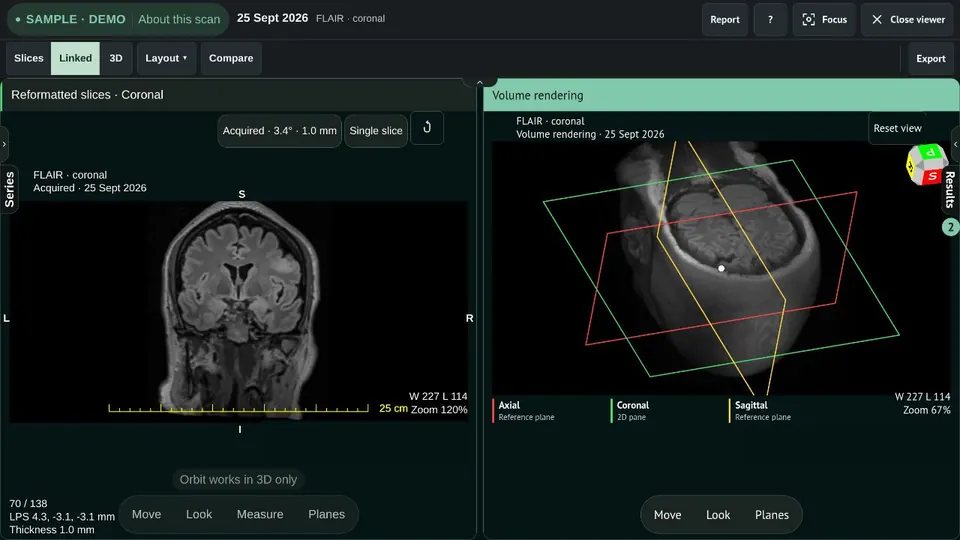 Open this sample in 3D
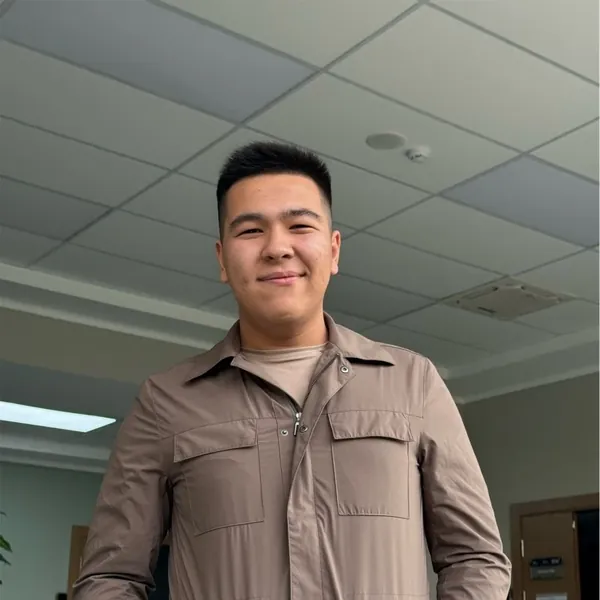
A medical specialist guiding our clinical and market work. Name to be announced.
These institutions are part of the team’s background. Their inclusion does not imply that they endorse Bayanmed.
FHIR is the international standard for how a health record is written down. Uzbekistan’s Digital Health Platform uses its R5 version. Keeping your cards in it from the first day means no conversion project when the clinic has to connect.
Coming next: photograph or scan a page, and the system fills a draft for staff to check. The original is kept, linked to what was taken from it.
No. Bayanmed runs in the browser on the computers and phones you already have.
Bayanmed is designed for staff who have never used a clinic system: simple screens, one task each, in Uzbek or Russian. Staff can switch language in the middle of a task.
Pilot terms are agreed with each clinic. Write to us and we will go through them on the first call.
Patients open their scans on a phone today. Next is a Telegram app where patients fill in their details before the visit and hear when their turn is near.
Tell us how a day runs at your clinic. We will show you the system on fictional patients and agree how a pilot would work for you.